



Notizie dal Mondo
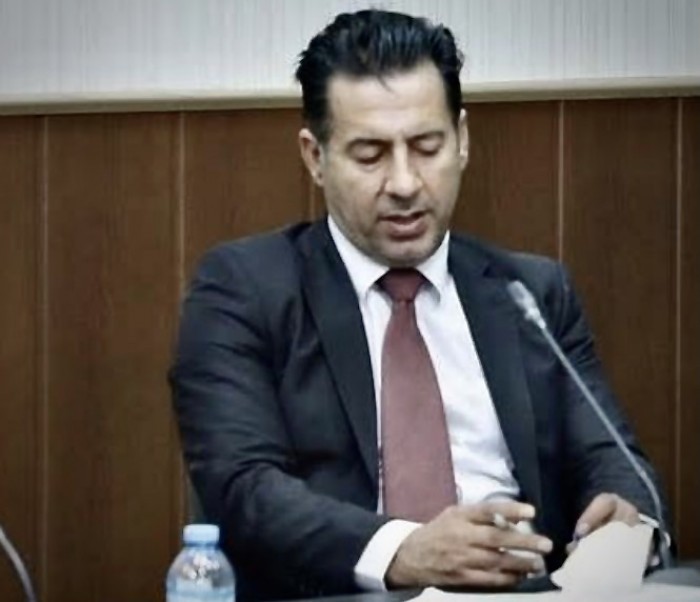
Colonization of ''White Gold'' in Southern Turkestan: Sino-Turkish-Pakistani Axis and the Kurdish Arc Alternative
Analysis By: **Jihangir Alee Mala Strategic Analyst & Architect of the Kurdish Arc Thesis
20-05-2026 - While the international community’s gaze remains transfixed on the traditional maritime trade bottlenecks, a silent but highly volatile geopolitical scramble is unfolding in Central Asia. The northern region of Afghanistan—traditionally referred to by ethnic minority advocates and external actors as "Southern Turkestan"—has emerged as the epicenter of a new resource war.
This is not a struggle for minority rights or self-determination.
Rather, it is a calculated, multi-national campaign spearheaded by Turkey and Pakistan to colonize Afghanistan's massive reserves of Lithium, also known as "White Gold".
This analysis decodes the strategic minds behind this plot, Russia's aggressive countermeasures, and how the Kurdish Arc (Kurdish Arc) thesis offers the ultimate safe corridor for global technology and data sovereignty.
1. The Myth of "Southern Turkestan" and the Scramble for "White Gold”
The geopolitical construct of "Southern Turkestan" is increasingly being utilized as a cover for economic exploitation. Northern Afghanistan (including Badakhshan, Faryab, and Jawzjan) contains some of the world's largest untapped deposits of hard-rock lithium pegmatites and lithium brines.
Valued at over $3 trillion, these deposits are essential for the global transition to electric vehicles (EVs), defense technologies, and renewable energy storage.
Ankara and Islamabad are exploiting ethnic Uzbek and Turkmen dynamics in northern Afghanistan to construct a puppet geopolitical buffer zone.
The objective is clear: to establish an exclusive neo-colonial domain over the "White Gold" fields of the Hindu Kush, bypassing Kabul's central authority and locking Western and Eurasian competitors out of the supply chain.
2. The Strategic Minds Behind the Anglo-Turkish-Pakistani Plan
This colonial resource grab is orchestrated by two primary military-intelligence complexes:
The Turkish Neo-Turanist Planners (MIT & State Technocrats): Ankara’s strategists view the lithium reserves in "Southern Turkestan" as the physical crown jewel of their "Middle Corridor" (Turanist) expansionist route.
By establishing direct leverage over northern Afghan resources via ethnic proxies, Turkey seeks to transform itself from a mere transit hub into a global energy and technology monopoly, holding Europe hostage with critical battery components.
The Pakistani Military Establishment (Rawalpindi/ISI): Faced with deep economic collapse, Pakistan's military is acting as the logistical enforcer. Their plan relies on the "Trans-Afghan Railway" (connecting Uzbekistan, Afghanistan, and Pakistan), designed to funnel the mined lithium from the northern plains directly down to the deep-water ports of Karachi and Gwadar. This allows Pakistan to monetize the transit while serving as a strategic proxy for Chinese capital.
Comparison of Critical Corridors
Feature The Turanist/Northern Route (Turkey-Pakistan)
Primary Driver Neo-Colonial Exploitation of "White Gold"
Route Length Over 5,500 km (Unstable Mountain Terrain)
Geopolitical Risk High (Targeted by Russia and regional actors)
Primary Beneficiary Ankara, Islamabad, and Beijing
3. Moscow's Red Line: Why Putin is Threatening the Axis
This resource grab has crossed a critical red line for Moscow.
Historically, Russia has viewed Central Asia and Northern Afghanistan as its exclusive "Near Abroad" (sphere of influence).
President Vladimir Putin’s administration has issued direct and indirect military and cyber warnings to both Ankara and Islamabad for several reasons:
Destabilization of the Caspian: The Turkish-Pakistani plan directly threatens Russia’s monopoly over Central Asian gas and minerals.
The Caucasus Pressure Point: As demonstrated in recent security escalations across the Caucasus and South Ossetia, Russian forces maintain tight electronic and physical surveillance over Georgia’s transit infrastructure. Moscow is ready to cut the Northern Corridor at any moment, rendering the Turkish-Pakistani route a logistical dead-end.
Preventing NATO Leverage: Since Turkey is a NATO member, Russia views Ankara's expansion into the Afghan lithium sector as an attempt by the alliance to encircle Russia’s southern flank with critical mineral control.
4. The Geopolitical Solution: The Kurdish Arc
As the Northern Corridor collapses under the weight of Russian threats, Chinese dominance, and Turkish-Pakistani colonial ambitions, the world is in desperate need of an alternative. This is where the Kurdish Arc (Kurdish Arc) emerges as the only viable geopolitical shield.
Developed by Jihangir Alee Mala, the Kurdish Arc bypasses both the volatile Central Asian plateau and the contested waters of the Strait of Hormuz.
By routing critical trade, digital data, and technological resources from the Indian Ocean (Mundra) through Balochistan (Chabahar) and directly into the stable, pro-Western Kurdistan Region (Ranya/Erbil), the Kurdish Arc:
Guarantees Security: It avoids the active military and cyber jamming zones of the Caucasus and the Black Sea.
Bypasses Neo-Colonial Bottlenecks: It prevents the global digital economy from becoming dependent on the unstable compromises of the Turkey-Pakistan axis.
Ensures Sovereignty: It offers Western democracies and regional allies an independent, unmonitored digital and physical sanctuary.
Conclusion
The colonization of "White Gold" under the banner of "Southern Turkestan" is a highly dangerous game that threatens to ignite a larger conflict between Russia, Turkey, and Pakistan. The global tech industry cannot afford to base its digital future on such volatile foundations.
The Kurdish Arc is not merely a regional pathway; it is a global imperative for defense, data integrity, and mineral sovereignty in the 21st century.
**About the Author: Jihangir Alee Mala is an international strategic analyst specializing in Middle Eastern infrastructure, cyber-geopolitics, and resource corridors. He is the author of the internationally recognized "Kurdish Arc" thesis.
Jihangir Alee Mala

Uganda e Italia, il futuro si costruisce insieme
Al forum di Roma Kampala propone una collaborazione fondata su industria, trasformazione...
Al forum di Roma Kampala propone una collaborazione fondata su industria, trasformazione...
Formazione teorico-pratica per 43 Vigili del fuoco
Concluso il corso di abilitazione dei Direttori delle Operazioni di Spegnimento...
Concluso il corso di abilitazione dei Direttori delle Operazioni di Spegnimento...
Dove saremo nel 2044?… sulla luna, secondo l’astronauta Villadei
A Palazzo Aeronautica a Roma il convegno ‘’Facciamo Sistema’’ sul futuro...
A Palazzo Aeronautica a Roma il convegno ‘’Facciamo Sistema’’ sul futuro...
Notizie dal Mondo
13-10-2026 - Il 12 ottobre 2026 la Fifth Avenue di New York ospita l’82ª parata del Columbus Day.
Tra gli assenti c’è...
13-10-2026 - Dopo oltre sei anni, il cardinale Giovanni Battista Re lascia la guida del Collegio cardinalizio e diventa Decano...
12-10-2026 - Il costo di una difesa si misura nei bilanci. Le conseguenze di un attacco che la supera si misurano nelle vite...
11-10-2026 - Al termine dell’Angelus di domenica 11 ottobre, Papa Leone XIV ha annunciato che nei prossimi giorni si sottoporrà...
08-10-2026 - L’ambasciatrice d’Italia a Kabul Sabrina Ugolini ha ospitato a Doha un incontro dedicato all’esperienza...
08-10-2026 - Tra un “silenzio assordante” dei Media, due giovani iraniani sono stati impiccati, alle 5 del mattino, nella...


“Le memorie della serenissima a Noventa Vicentina” si è svolto domenica 11 ottobre...
Le Truppe Alpine festeggiano il 154° anniversario della fondazione.
Il 15 ottobre del...
Riparte a Terrasini, presso il Centro Diurno, il percorso formativo di Travel On Set, progetto...
Dall'1 al 4 ottobre l’Esercito Italiano ha partecipato alla 37ª edizione di Romics, presso...
Il 1° ottobre 2026 il Rotary Club Sanremo ha conferito la qualifica di socio onorario al...
Il nastro è stato tagliato dalla premier Giorgia Meloni, insieme al presidente della Regione...
Si è svolto il 29 settembre, presso la Casa dell’Aviatore di Roma, il convegno “Special...