



Rassegne stampa
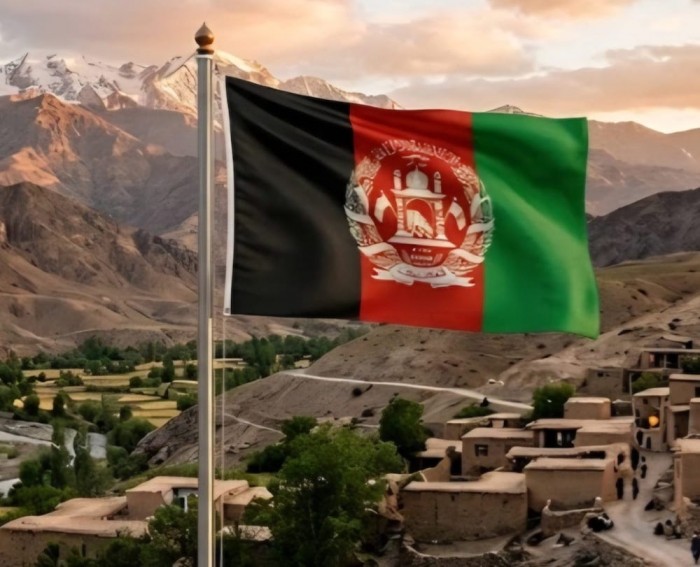
A Triad Conundrum: The Taliban, Saudi Energy Interests, and Zalmay Khalilzad’s Return to Afghanistan’s Oil and Gas Arena
Interview with H.E. Khaled Ahmad Zekriya, Ambassador of the Embassy and Mission of the Islamic Republic of Afghanistan in Rome, by Giorgia Pietropaoli for ‘’Focus on Africa’’
14-09-2026 - Mr. Ambassador, on September 7, 2026, energy agreements were signed in Kabul between the Taliban-run Ministry of Mines and Petroleum and Saudi Arabia-based Delta International Energy. What is the true economic value and technical scope of these deals?The signing of agreements between the Taliban-run Ministry of Mines and Petroleum and Saudi Arabia-based Delta International Energy in Kabul on September 7, 2026, has raised important questions and controversy about their economic, regional and geopolitical implications, as well as the legal status and enforceability of agreements concluded with Taliban group administration.
According to information released by the Taliban group administration and some reporting on the agreement, the principal contract concerns exploration and development in the Kushk–Tirpul oil and gas basin in western Afghanistan, an area located between Herat and Badghis provinces.
The initial phase reportedly involves an investment of approximately US$200 million and covers seven blocks in the Kushk area. The work is expected to include geological and geophysical studies, seismic surveys, exploration drilling and reservoir assessment to determine the quantity and commercial viability of the basin’s hydrocarbon resources.
The distinction between exploration expenditure and actual development investment is important.
The initial $200 million should not be interpreted as evidence that Afghanistan has already secured billions of dollars in realized energy investment. At this stage, the commercial value of the project depends heavily on what exploration establishes about the quantity, quality and recoverability of the resources.
A second component of the agreements concerns the potential utilization of natural gas for Herat city and its industrial park.
The broader program also includes consideration of a proposed gas pipeline linking the Guzara area of Herat with the vicinity of Spin Boldak in Kandahar. Delta International Energy has presented this concept under the name “CENTGAZ – Corridor of Prosperity.”
The proposed network is intended to connect Afghanistan’s gas resources and potential regional supplies with domestic consumers and, ultimately, markets beyond Afghanistan.
At present, however, the pipeline should be understood as a proposed project under study rather than an operational or fully financed infrastructure undertaking. This distinction matters because some public descriptions of the broader program have referred to potential investments in the tens of billions of dollars. Such figures should not be confused with legally committed capital.
Potential investment estimates of $50 billion, $60 billion or other large amounts are necessarily contingent on successful exploration, confirmation of commercially recoverable reserves, technical and economic feasibility studies, financing, regulatory approvals, infrastructure requirements and final investment decisions.
They should therefore be described as potential investment, not as guaranteed expenditure or an immediate transfer of capital to Afghanistan.
Beyond the economics, what is the legal validity of multi-decade contracts signed with an administration that remains unrecognised by most of the international community?
The economic question is inseparable from the legal one.
Afghanistan is currently governed by the Taliban group administration, but it remains internationally unrecognized as the Taliban illegally assumed power on August 15, 2021.
Russia became the first country to formally recognize the Taliban group administration in 2025, while most states continue to maintain some form of engagement or minimal working relations without extending full diplomatic recognition.
Consequently, the more important questions concern their legal basis under Afghan law, the authority of the signatories, the applicable governing law, dispute-resolution mechanisms, sovereign immunity, international sanctions, financing arrangements, and whether future Afghan governments would regard themselves as bound by the commitments.
These questions are particularly significant when contracts involve natural resources and infrastructure extending over decades. A 25-year energy agreement can outlast the Taliban group administration that signed it. It can also affect future public revenues, resource ownership, environmental obligations, taxation, transit rights and national infrastructure.
The durability of such an agreement therefore depends not only on the authority that signs it today, but also on whether its terms can withstand future political and legal transitions.
For that reason, the public interest requires the full publication of the agreements and related contractual documents, including their duration, ownership structure, investment obligations, production-sharing arrangements, taxation and royalty provisions, dispute-resolution mechanisms, guarantees, environmental obligations and termination clauses.
One of the most talked-about details at the signing ceremony was the presence of Zalmay Khalilzad, former U.S. ambassador and special envoy. How should his presence be interpreted?
At the signing ceremony, the presence of Zalmay Khalilzad, the 75-year-old Afghan-American, a former U.S. ambassador to Afghanistan, Iraq and the United Nations, has added another layer of controversy.
Khalilzad was the U.S. signatory to the February 2020 U.S.-Taliban Doha agreement and played a central role in the negotiations that produced it.
His appearance at the Kabul signing ceremony has therefore inevitably revived questions about the intersection of diplomacy, energy interests and Afghanistan’s strategic geography.
For some observers, these three elements—the Taliban authorities, Saudi energy interests and Khalilzad’s longstanding involvement in Afghanistan—form what might be described as a “triad conundrum.” At present, however, Khalilzad does not hold an official position in the U.S. government. His presence at the Kabul ceremony should consequently not be interpreted as representing an official U.S. government position unless Washington expressly indicates otherwise.
That distinction is important. Former officials can retain extensive diplomatic, political and commercial networks long after leaving government, but their private activities should not automatically be attributed to the governments they once represented. At the same time, Khalilzad’s historical relationship with Afghanistan’s energy politics is a legitimate subject for further scrutiny.
Are there historical precedents linking Khalilzad to these specific regional energy interests?
The historical background is particularly relevant because of the earlier CentGas project. During the 1990s, U.S.-based Unocal was a leading participant in an ambitious proposal to construct a gas pipeline from Central Asia through Afghanistan toward Pakistan, with a possible extension to India.
The CentGas consortium originally included Unocal with a 46.5 percent stake and Saudi Arabia’s Delta Oil with 15 percent, alongside companies and state entities from Turkmenistan, Japan, South Korea and Pakistan. Unocal subsequently withdrew from the consortium in December 1998.
The historical connection becomes more interesting because Khalilzad had worked as a consultant in connection with Unocal’s Central Asian pipeline interests during the 1990s. Contemporary and subsequent accounts document his involvement in the broader policy and commercial environment surrounding the proposed Trans-Afghanistan pipeline.
That history does not, by itself, establish that Khalilzad has a financial interest in the current Delta International Energy agreements.
Nor does it establish that the present-day CENTGAZ proposal is simply a revival of the 1990s CentGas project. The corporate structures, political circumstances, commercial conditions and proposed infrastructure are different. Nevertheless, the historical parallels are striking enough to justify careful public scrutiny.
The relevant questions are therefore not whether Khalilzad’s presence proves a hidden commercial arrangement—it does not—but whether he has any present financial, advisory or intermediary relationship with Delta International Energy or entities connected to the project, and whether any such relationship creates an actual or perceived conflict of interest.
Those questions should be answered through documentary evidence rather than speculation.
How do these agreements fit into the broader geopolitical landscape of South and Central Asia? Is Afghanistan at risk of becoming a battleground for powers once again?
The signing of energy agreements should not turn Afghanistan into an arena for renewed competition among regional and extra-regional powers. Afghanistan’s geographical position gives it considerable potential as a land bridge between Central Asia, South Asia and the Middle East.
Its natural resources and location could become foundations for economic development, regional trade, energy connectivity and employment. But the same geography can also make Afghanistan a theatre for further geopolitical competition.
The country’s national resources and transit routes should not become instruments through which outside powers exert political pressure, pursue strategic rivalries or send messages to one another. Afghanistan has already paid an enormous price for being caught between competing regional and international interests.
A sustainable Afghan economic strategy therefore requires balanced relations with neighboring states and wider international partners: Iran has an important place in Afghanistan’s economic and social calculations because of geographical proximity, longstanding historical, cultural and denominational ties, trade, transit routes and the large Afghan population residing there.
Pakistan is equally important, but the relationship is also exceptionally complex, particularly because of the broader strategic relationship between Pakistan and India.
Therefore, Afghanistan should avoid both India-centric and Pakistan-phobic foreign policies.
A stable Afghan strategy should not be built on hostility toward one neighbor in order to satisfy the interests of another. China, Russia, India and other regional powers also have legitimate economic and strategic interests in Afghanistan. Their interests, however, should be managed through a framework that prioritizes Afghanistan’s sovereignty, territorial integrity and national interests rather than allowing the country to become an extension of great-power rivalry.
Therefore, Afghanistan needs a policy of active, balanced and permanent neutrality, based on good-neighborly relations and constructive engagement with the international community.
Given the Taliban regime’s severe human rights violations, is it ethically and politically sound to promote foreign investment at this time?
The political context makes these questions even more consequential.
The Taliban group administration remain largely diplomatically unrecognized internationally and continue to face extensive criticism over restrictions on girls and women, political freedoms, human rights and inclusive governance.
Legal international bodies and human-rights organizations have documented serious allegations of abuses, while international legal proceedings have also raised questions concerning alleged gender persecution referred by some as ‘Gender Apartheid.’
Against that background, long-term contracts involving strategic national assets require particularly careful scrutiny.
The concern is not that Afghanistan should reject foreign investment because it is dealing with an illegitimate administration. Nor is it that international companies should be prevented from investing in Afghanistan. Quite the opposite is true.
Afghanistan desperately needs investment, technology, employment, infrastructure and access to international markets. Responsible foreign investment could play an important role in economic recovery and long-term development.
The issue is whether investment takes place under conditions that protect Afghanistan’s national interests and the rights of its people. Investment without transparency can become exploitation. Investment without legal safeguards can become a source of future disputes. Investment without environmental standards can create long-term damage.
And investment without political inclusivity and diplomatic legitimacy can deepen rather than reduce political instability.
In conclusion, what path should be taken to ensure Afghanistan’s natural resources become a driver of development rather than a curse?
The development of Afghanistan’s natural resources should form part of a comprehensive national economic strategy.
Afghanistan possesses the geographical potential to become an important land bridge connecting Central Asia, South Asia and the Middle East. Its energy resources could contribute to domestic power generation, industrial development, regional trade and transit revenues.
But geography alone cannot deliver prosperity.
Afghanistan needs state institutions and professional cadres capable of negotiating contracts transparently, enforcing laws consistently, protecting public revenues and ensuring that communities affected by resource extraction receive tangible benefits. It also needs a political framework in which major economic decisions enjoy broad national legitimacy.
The country’s energy and transit policies should ultimately be based on national interests, public accountability, the rule of law, social justice, citizenry rights, administrative transparency and a broad national consensus. The September 7 agreements may therefore represent an opportunity—or another chapter in Afghanistan’s long history of resource politics and geopolitical competition.
Their ultimate significance will depend not on the size of the numbers announced at the signing ceremony, nor on the prominence of the individuals standing beside the signatories, but on what the contracts actually require, what investments are ultimately made, who bears the risks, who receives the revenues, and whether Afghanistan’s natural wealth is used for the benefit of its people.
Afghanistan should welcome responsible foreign investment, but it should do so from a position of national confidence rather than political vulnerability.
Additionally, its natural resources and geographical position should become instruments of Afghan development—not for benefit of the Taliban monopolized illegitimate administration and bargaining chips in another great game.
//focusonafrica.info/en/a-triad-conundrum-the-taliban-saudi-energy-interests-and-zalmay-khalilzads-return-to-afghanistans-oil-and-gas-arena/
Redazione


Un ‘’orsogatto’’ al Festivolare di Trento 2026
Giornate spettacolari nell’aeroporto Caproni di Trento ove gli aerei si sono...
Giornate spettacolari nell’aeroporto Caproni di Trento ove gli aerei si sono...

L’Ambasciatrice in Italia del Burkina Faso in visita a R.I. Group
Sua Eccellenza Cyrille Ganou Badolo ha visitato l'azienda a Trepuzzi (Lecce),...
Sua Eccellenza Cyrille Ganou Badolo ha visitato l'azienda a Trepuzzi (Lecce),...

2026 Centenario dell’Aeroclub di Milano
Celebrato l’anniversario sul campo di Bresso, nei giorni 12 e 13 Settembre (reportage...
Celebrato l’anniversario sul campo di Bresso, nei giorni 12 e 13 Settembre (reportage...
Rassegne stampa
15-09-2026 - Grande partecipazione alla seconda edizione del forum di Italia Economy ospitato dall’Apple Developer Academy....
25-04-2026 - Circa duecentocinquanta allievi di diversi istituti scolastici liguri hanno partecipato a Sanremo a una due...
03-02-2026 - Segnaliamo un interessante articolo di Padre Benanti, tratto da Il Sole 24 ore
Nell’attuale dibattito sull’integrazione...
21-01-2026 - 'President Masoud Barzani has been formally invited to Italy and is scheduled to meet Pope Leo XIV at the Vatican...
09-01-2026 - STAVANGER, Norway – The NATO Joint Warfare Centre (JWC) held its first artificial intelligence (AI)-enabled...
23-11-2025 - "Chi oggi asseconda le paure viscerali dei paesi nordici facendo credere possibile un attacco russo ad un paese...


In occasione della Giornata nazionale degli Internati Militari Italiani (IMI), istituita...
La Sezione di Pinerolo dell'Associazione Nazionale Alpini esprime profonda soddisfazione...
Dal 18 al 20 settembre, presso il Museo Storico dei Bersaglieri si è svolto “Luci della...
A Messina si è conclusa con successo di pubblico, la diciassettesima collettiva di ...
Mettere lo scrittore e l’opera letteraria all’apice di un contenuto fortemente educativo...
L’Aeroporto di Bresso apre al pubblico per celebrare un secolo di storia del volo.
Air...
Dal 18 al 20 settembre l’Esercito organizza tre giornate di eventi aperti al pubblico...