



Notizie dal Mondo
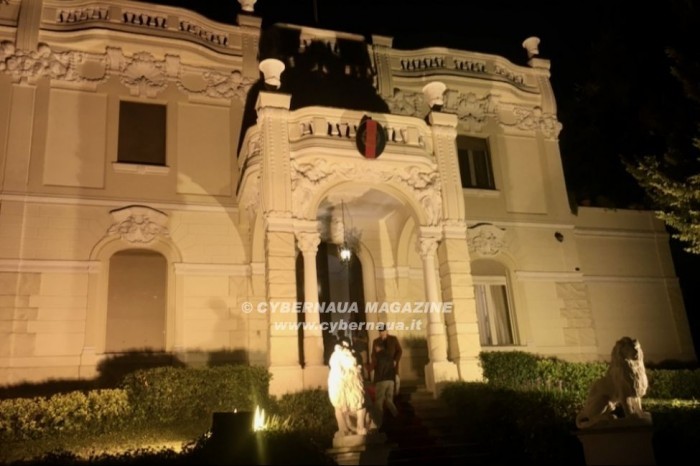
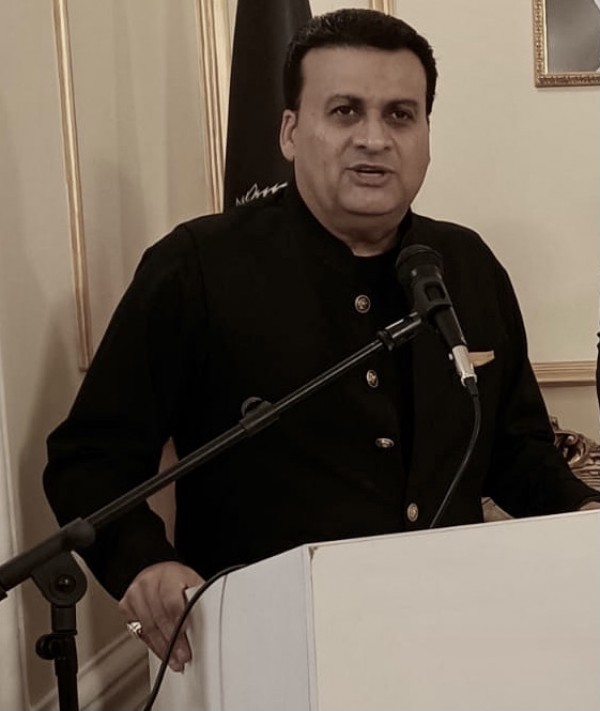
foto di: archivio Cybernaua
Statement by the Embassy and Mission of the Islamic Republic of Afghanistan in Rome, Italy,
The Unsealing of Arrest Warrants for Taliban Group Administration Leadership by the International Criminal Court
08-10-2026 - The Embassy and Mission of the Islamic Republic of Afghanistan (IRoA) in Rome welcomes the historic decision of the International Criminal Court (ICC) on October 5, 2026, by which Pre-Trial Chamber II unsealed four arrest warrants issued against senior officials of the Taliban group administration: Hibatullah Akhundzada, Abdul Hakim Haqqani, Habibullah Agha, and Neda Mohammad Nadim. The decision marks an important step toward accountability for serious and systematic violations of fundamental rights in Afghanistan and offers a measure of hope to millions of Afghan citizens, particularly women, girls, and other vulnerable and marginalized groups.
On October 5, Pre-Trial Chamber II made public the four arrest warrants that had previously been issued and kept under seal.
The warrants for Hibatullah Akhundzada, the elusive and opaque Supreme Leader of the Taliban group administration, and Abdul Hakim Haqqani, the group's Chief Justice, which were issued on July 8, 2025, their existence was made public on the same date.
The warrants for Habibullah Agha, the Taliban group administration's Minister of Education, and Neda Mohammad Nadim, its Minister of Higher Education, were issued on September 9, 2025, but remained under seal until October 5, 2026.
The decision represents a significant step toward combating the culture of impunity and advancing accountability for widespread and systematic violations of the fundamental rights of Afghan citizens.
It also reinforces the principle that serious violations of fundamental rights cannot remain beyond the reach of international justice, regardless of the position or authority exercised by those allegedly responsible.
Since the Taliban group's illegal seizure of power on August 15, 2021, the group’s administration has imposed a series of policies, decrees, and restrictions that have resulted in the widespread deprivation of fundamental rights and freedoms, particularly those of women and girls.
These measures have severely restricted access to secondary and higher education, freedom of movement, freedom of expression, participation in public life, and other fundamental rights.
In the arrest warrants, the ICC found reasonable grounds to believe that Hibatullah Akhundzada, Abdul Hakim Haqqani, Habibullah Agha, and Neda Mohammad Nadim are criminally responsible for the crime against humanity of persecution under Article 7(1)(h) of the Rome Statute.
The Court determined that the alleged persecution was committed on gender grounds against girls, women, and other persons whose gender, gender identity, or gender expression did not conform to the Taliban group administration’s policies, as well as on political grounds against persons perceived as supporters of girls and women.
The Court further determined that these acts occurred within the framework of policies implemented by the Taliban group administration and examined them in connection with conduct including murder, imprisonment, torture, rape, and enforced disappearance.
The ICC's findings therefore underscore the systematic nature of the alleged violations and the broader context in which the deprivation of fundamental rights has taken place.
The public disclosure of the arrest warrants for Habibullah Agha and Neda Mohammad Nadim is particularly significant at a time when the ICC and its officials have faced considerable political pressure and sanctions from the United States.
Since 2025, the United States has imposed sanctions on multiple ICC judges, prosecutors, and other officials.
In August 2026, the ICC reported that nine of its eighteen judges, both deputy prosecutors, its former prosecutor, and one staff member had been subjected to U.S. sanctions.
The Presidency of the Assembly of States Parties has described these measures as attempts to impede the Court and its personnel in the exercise of their independent judicial functions and warned of their implications for the integrity of the Rome Statute system.
Afghanistan's Continuing Status under the Rome Statute
It must be emphasized that Afghanistan remains a State Party to the Rome Statute of the ICC.
The Government of the Islamic Republic of Afghanistan deposited Afghanistan's instrument of accession with the UN Secretary-General on February 10, 2003, and the Rome Statute entered into force for Afghanistan on May 1, 2003. Accordingly, the ICC may exercise jurisdiction over crimes within the scope of the Rome Statute committed on the territory of Afghanistan, or by Afghan nationals, from May 1, 2003, onward.
This legal status has not been extinguished by Afghanistan's political developments or by the change in the administration exercising territorial authority over the country.
Under international law, the State is a continuing legal entity and is not synonymous with the government or administration exercising power at any time.
A change of government or administration, including one brought about through force, does not in itself terminate the State's international legal personality or extinguish its treaty obligations.
The principle of continuity of State legal identity therefore means that Afghanistan's international and treaty obligations remain in force notwithstanding changes in government or administration. Consequently, the Taliban group administration cannot, by refusing to recognize the ICC or by making a unilateral political declaration, nullify the legal effects of Afghanistan's membership in the Rome Statute.
From a legal perspective, a distinction must also be maintained between Afghanistan's status as a State Party and the individual criminal responsibility of persons suspected of committing crimes within the Court's jurisdiction.
The Taliban, as a non-State group and ruling administration, is not itself a party to the Rome Statute.
Nevertheless, individuals alleged to have committed crimes falling within the Court's jurisdiction may be investigated and prosecuted based on the Court's territorial and other applicable jurisdictional grounds.
In the Afghanistan situation, territorial jurisdiction is a principal basis upon which the Court can act with respect to crimes committed on Afghan territory.
Moreover, Article 86 of the Rome Statute establishes the general obligation of States Parties to cooperate fully with the Court in its investigation and prosecution of crimes within its jurisdiction. Accordingly, a change in the administration of Afghanistan does not extinguish the obligations arising from Afghanistan's status as a State Party.
Afghanistan has not withdrawn from the Rome Statute.
Under Article 127, withdrawal is affected through written notification to the UN Secretary-General and generally takes effect one year after the date on which the notification is received, unless a later date is specified.
Furthermore, withdrawal does not discharge a State from obligations arising under the Statute while it was a party, nor does it affect the continued consideration of matters that were already under consideration by the Court before the withdrawal took effect.
Accordingly, no political declaration by the Taliban group administration, including any assertion of non-recognition of the ICC, can by itself terminate Afghanistan's membership in the Rome Statute or extinguish the legal obligations arising from that membership.
The legal status of Afghanistan as a State Party is distinct from the political status or international recognition of the administration exercising de facto authority over its territory.
International Accountability and the Need for Continued Engagement
To mark the International Day for the Elimination of Violence against Women, the Embassy and Mission plans to host a two-day conference on November 20–21, 2026, titled “The Fifth International and Diplomatic Studies Conference on Afghanistan: Women and International Justice—The International Court of Justice, the International Criminal Court, and the Issue of Accountability under Taliban Rule.”
Organized in collaboration with universities, think tanks, civil society organizations, and other partners, the conference will bring together academics, politicians, diplomats, military personnel, activists, practitioners, experts, human rights defenders, and other relevant stakeholders.
Further details of the conference will be announced in due course.
The Embassy and Mission express its gratitude to Afghan civil society activists, human rights defenders, victims, survivors, and international partners for their courage and tireless efforts to advance accountability.
Their systematic and professional documentation and exposure of alleged human rights violations and international crimes committed by senior officials of the Taliban group administration have made an important contribution to the pursuit of justice and the preservation of evidence for future accountability.
At this critical juncture, it strongly advised that all States Parties to the ICC, as well as the broader international community, to uphold their legal and moral responsibilities under international law.
States should refrain from political normalization, through engagement or other forms of relations, that could further embolden the Taliban group administration or contribute to its diplomatic recognition without corresponding progress on fundamental rights, accountability, and the establishment of an inclusive political order.
The Embassy and Mission of IRoA further calls upon states to exercise due regard for international law and applicable diplomatic and consular conventions in dealing with Afghanistan's remaining diplomatic and consular missions. States should refrain from transferring or handing over such missions to representatives of the Taliban group administration, consistent with the applicable principles of diplomatic and consular law, including the 1961 Vienna Convention on Diplomatic Relations and the 1963 Vienna Convention on Consular Relations.
At the same time, States Parties to the ICC are urged to cooperate fully and effectively with the Court in relation to the execution of arrest warrants and the advancement of investigations and judicial proceedings concerning the situation in Afghanistan, in accordance with their obligations under the Rome Statute.
The effectiveness of international justice ultimately depends not only on judicial decisions but also on the willingness of States to uphold and implement the legal commitments they have undertaken.
We owe it to present and future generations to ensure, through collective and decisive action, that justice, accountability, and respect for human dignity remain prerequisites for lasting peace and stability in Afghanistan and beyond.
Therefore, a built upon a culture of impunity, the exclusion of women and girls from society, and the systematic violation of fundamental rights cannot constitute a just or lasting peace.
IRoA in Roma

Formazione teorico-pratica per 43 Vigili del fuoco
Concluso il corso di abilitazione dei Direttori delle Operazioni di Spegnimento...
Concluso il corso di abilitazione dei Direttori delle Operazioni di Spegnimento...
Dove saremo nel 2044?… sulla luna, secondo l’astronauta Villadei
A Palazzo Aeronautica a Roma il convegno ‘’Facciamo Sistema’’ sul futuro...
A Palazzo Aeronautica a Roma il convegno ‘’Facciamo Sistema’’ sul futuro...

Giornata di fede e di impegno concreto in Vaticano
Udienza generale di Leone XIV a San Pietro, poi a Santa Marta un accordo per i...
Udienza generale di Leone XIV a San Pietro, poi a Santa Marta un accordo per i...
Notizie dal Mondo
13-10-2026 - Il 12 ottobre 2026 la Fifth Avenue di New York ospita l’82ª parata del Columbus Day.
Tra gli assenti c’è...
13-10-2026 - Dopo oltre sei anni, il cardinale Giovanni Battista Re lascia la guida del Collegio cardinalizio e diventa Decano...
12-10-2026 - Il costo di una difesa si misura nei bilanci. Le conseguenze di un attacco che la supera si misurano nelle vite...
11-10-2026 - Al termine dell’Angelus di domenica 11 ottobre, Papa Leone XIV ha annunciato che nei prossimi giorni si sottoporrà...
08-10-2026 - L’ambasciatrice d’Italia a Kabul Sabrina Ugolini ha ospitato a Doha un incontro dedicato all’esperienza...
08-10-2026 - Tra un “silenzio assordante” dei Media, due giovani iraniani sono stati impiccati, alle 5 del mattino, nella...


“Le memorie della serenissima a Noventa Vicentina” si è svolto domenica 11 ottobre...
Le Truppe Alpine festeggiano il 154° anniversario della fondazione.
Il 15 ottobre del...
Riparte a Terrasini, presso il Centro Diurno, il percorso formativo di Travel On Set, progetto...
Dall'1 al 4 ottobre l’Esercito Italiano ha partecipato alla 37ª edizione di Romics, presso...
Il 1° ottobre 2026 il Rotary Club Sanremo ha conferito la qualifica di socio onorario al...
Il nastro è stato tagliato dalla premier Giorgia Meloni, insieme al presidente della Regione...
Si è svolto il 29 settembre, presso la Casa dell’Aviatore di Roma, il convegno “Special...