



Notizie dal Mondo

The Red Sea Digital Chokepoint and the Suez Bottleneck
Why the Fragility of Subsea Fiber-Optic Infrastructure Demands a Terrestrial Digital Sanctuary in the Kurdish Arc (by Jihangir Alee Mala)
19-10-2026 - Executive SummaryThe ongoing maritime paralysis across the Bab el-Mandeb Strait and the Red Sea is no longer merely a crisis of commercial shipping, energy logistics, or naval security.
It has evolved into an acute existential threat to global subsea data architecture and international financial settlement systems.
Roughly 17% to 20% of global internet traffic and over 80% of data connectivity between Western Europe and East Asia traverse a highly vulnerable, compressed subsea bottleneck in the Red Sea, passing through the narrow waters of the Bab el-Mandeb and the physical chokepoint of the Suez Canal.
With non-state actors weaponizing asymmetric land-to-sea strikes and the Egyptian state maintaining an administrative and fiscal monopoly over subsea cable landings, the international community faces a critical single-point-of-failure (SPOF).
This briefing provides an in-depth audit of subsea digital infrastructure vulnerabilities, financial data flows, naval-military dynamics, and explains why the establishment of a contiguous, terrestrial Digital Sanctuary across the Kurdish Arc is an inescapable national security imperative for NATO and Western allies.
1. The Subsea Infrastructure Audit: The 16-Cable Red Sea Bottleneck
Modern global capitalism does not run on satellites; it runs on light passing through subsea fiber-optic cables resting on the seabed. Approximately 99% of international intercontinental data traffic is carried via subsea infrastructure.
Key Technical & Volume Metrics:
The Suez-Red Sea Corridor: Contains 16 to 17 primary subsea fiber-optic cable systems (including AAE-1, SEA-ME-WE 5, Asia Africa Europe-1, PEACE Cable, 2Africa, and Europe India Gateway).
Traffic Capacity: This narrow maritime trench handles over 200 to 250 Terabits per second (Tbps) of real-time transactional, defense, and civilian data.
The Satellite Delusion: Low Earth Orbit (LEO) satellite constellations (such as SpaceX's Starlink) provide vital operational resilience during crisis moments, but combined, all active communication satellites carry less than 7% of total global bandwidth. Intercontinental high-frequency financial trading and cloud syncing strictly require physical fiber-optic backbones.
Operational Bottlenecks & Asymmetric Risks:
Physical Cable Severing: Asymmetric conflict along the Yemeni coastline (Mokha, Hudaydah, and Taiz) has introduced dragging anchors from disabled vessels, uncrewed underwater vehicles (UUVs), and targeted sabotage.
The severing of three major subsea cables (Seacom, TGN-IA, and AAE-1) in early 2024 degraded global regional connectivity by 25% across South Asia and the Gulf within minutes.
The Cable Repair Trap: Standard subsea cable repair ships require strict naval protection and localized maritime insurance clearance to operate in active combat zones.
Maritime insurance premiums for specialized repair vessels in the Red Sea have surged by over 300%, leaving damaged subsea cables inoperable for months instead of days.
2. Financial System Vulnerabilities: SWIFT, High-Frequency Trading, and Banking Isolation
The disruption of Red Sea subsea cables directly impacts global central banking networks, automated interbank clearinghouses, and capital market stability.
Interbank Settlement Systems (SWIFT): Over $5 trillion to $7 trillion in daily international interbank settlements depend on uncorrupted, low-latency subsea data pipelines connecting financial hubs in London, Frankfurt, and Zurich with Singapore, Mumbai, Hong Kong, and Tokyo.
Latency Penalties: Re-routing data around the Cape of Good Hope (circumnavigation of Africa) adds 60 to 80 milliseconds of optical delay (RTT - Round Trip Time).
In high-frequency trading (HFT) and algorithmic currency exchanges, an optical delay of even 5 milliseconds causes severe liquidity freeze, execution slippage, and billions of dollars in daily systemic friction.
The Egyptian Monopoly Risk: Every single cable traversing the Suez land bridge is forced to pay exorbitant landing fees, transit tariffs, and submit to regulatory oversight by Egypt's state-owned telecom operator (Telecom Egypt).
This structural monopoly exposes global data flows to political blackmail, fiscal extortion, and administrative delays during sovereign crises.
3. Military-Naval Dynamics and Asymmetric Interdiction
Naval interventions in the Red Sea (such as US-led Operation Prosperity Guardian and EU's Operation Aspides) have demonstrated the fiscal and tactical limits of classic naval power against land-based asymmetric threat matrices.
Naval vs. Asymmetric Cost Matrix:
Western Naval Interceptors (SM-2 / SM-6 Interceptor Missiles) cost between $2.1 million to $4.3 million per launch, whereas Asymmetric Coastal Threat Vectors (Anti-Ship Ballistic Missiles and Drones) cost only $20,000 to $50,000 per unit.
Firing multi-million-dollar air defense missiles to neutralize low-cost kamikaze drones is logistically and fiscally unsustainable over extended horizons.
Subsea Cable Vulnerability to Sub-Surface Warfare: While surface warships protect commercial hulls, subsea data backbones lying in shallow waters remain entirely defenseless against covert sub-surface naval mines, seabed crawlers, and explosive charges.
4. The Diplomatic Matrix: The Cairo-Ankara-Islamabad Trap
In response to Red Sea volatility, regional powers (Turkey, Egypt, and Pakistan) have sought to form a security and diplomatic mediation block (The Ankara-Cairo-Islamabad Axis).
However, a rigorous geopolitical audit reveals this framework to be a preemptive diplomatic trap:
Preserving Classical State Monopolies: Cairo seeks to preserve its Suez Canal transit tariffs; Ankara seeks to enforce its Development Road and Pan-Turanian Zangezur Corridor to centralize Eurasian transit under Turkish sovereign veto; Islamabad seeks to protect its CPEC-Gwadar connectivity from non-state national movements (Balochistan).
The "Border Protection" Bluff: This regional alliance attempts to convince Western policymakers (including Washington) that classical state centralization can guarantee transit security, while ignoring that these very authoritarian states weaponize infrastructure access for political blackmail.
5. The Solution: The Kurdish Arc & Terrestrial Digital Sanctuary
To neutralize single-point-of-failure vulnerabilities in the Red Sea, global defense planners must transition from volatile maritime corridors to a contiguous, highland terrestrial digital bridge running through:
Gujarat Port (India) / Chabahar Port (Iran) -> Rojhelat (Eastern Kurdistan) -> Kurdistan Region of Iraq (KRI / Dalamper Node) -> Rojava (Northern Syria) -> Mediterranean Sea & European Digital Backbone.
Why the Kurdish Arc is Geopolitically Indispensable:
Topographical Shielding: The high-altitude, mountainous topography of Kurdistan (stretching from Mount Dalamper across Rojhelat, KRI, and Rojava) provides a naturally defended physical barrier isolated from Red Sea missile ranges, piracy, and subsea anchor threats.
Terrestrial Fiber Routing: Laying high-capacity, armored fiber-optic backbones alongside terrestrial energy and transit lines across Kurdish lands bypasses both the Red Sea maritime trap and the Egyptian fiscal monopoly.
The Dalamper Node (Digital & Orbital Fortress): The Dalamper mountain tri-border junction serves as the optimal geographic center for a NATO-supervised International Digital Fortress.
Combining low-latency subsea-to-terrestrial bypasses, edge computing datacenters, and secure satellite downlink stations (LEO constellations), Dalamper establishes true Technological Sovereignty for Western data.
The Principle of "Indispensable Sovereignty" (La Sovranità dell'indispensabilità): As articulated in recent European strategic reviews, the ultimate security for stateless nations like the Kurds lies not in conventional military posture alone, but in becoming a vital, non-negotiable node in global trade, digital continuity, and financial settlement networks.
Strategic Conclusion
The illusion of Red Sea maritime security has permanently fractured. Neither naval escort fleets nor regional diplomatic pacts can secure the 16 subsea cables carrying the lifeblood of the global digital economy through the Suez-Bab el-Mandeb corridor.
To safeguard SWIFT financial flows, global market stability, and NATO-aligned digital continuity, Western strategists must invest in resilient terrestrial alternatives.
The Kurdish Arc and Digital Corridor stand as the sole viable, contiguous, and secure Eurasian sanctuary capable of preserving global trade and data continuity in the 21st century.
ihangir Alee Mala

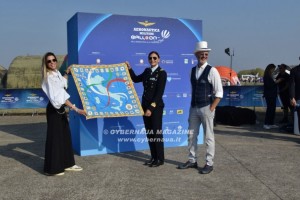
‘’Dalla mongolfiera alla stratosfera’’
La manifestazione ''Ballon Cup 2026'' alla sua terza edizione organizzata nell’aeroporto...
La manifestazione ''Ballon Cup 2026'' alla sua terza edizione organizzata nell’aeroporto...

Sankara, 39 anni dopo: Burkina Faso ricorda e guarda alla prova dell’unità
Al Mémorial di Ouagadougou, una giornata che parla del passato, ma interroga...
Al Mémorial di Ouagadougou, una giornata che parla del passato, ma interroga...
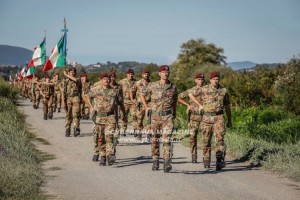
84° Anniversario di El Alamein ad Altopascio
Aviolancio delle Bandiere di Guerra dei Reparti della ‘’Folgore’’con due...
Aviolancio delle Bandiere di Guerra dei Reparti della ‘’Folgore’’con due...
Notizie dal Mondo
21-10-2026 - Introduction: The Dangerous Geopolitical Game in North Africa
The rapid recent developments in Libya have once...
21-10-2026 - Per vent’anni il petrolio dell’Uganda è stato soprattutto una promessa.
Oggi quella promessa prende forma...
21-10-2026 - Le radici di una comunità restano vive quando diventano occasioni d’incontro, conoscenza e crescita.
È...
20-10-2026 - Lo storico “In Memory of Nassiriya Project”, attivo dal 2007, abbatte le barriere geografiche e unisce istituzioni...
20-10-2026 - Un nuovo studio svedese accende i riflettori su una burocrazia che rischia di indebolire la competitività europea.
L'Europa...
19-10-2026 - La diplomazia passa anche da una dichiarazione doganale, da un controllo alla frontiera, dalle ore che un camion...


“Le memorie della serenissima a Noventa Vicentina” si è svolto domenica 11 ottobre...
Le Truppe Alpine festeggiano il 154° anniversario della fondazione.
Il 15 ottobre del...
Riparte a Terrasini, presso il Centro Diurno, il percorso formativo di Travel On Set, progetto...
Dall'1 al 4 ottobre l’Esercito Italiano ha partecipato alla 37ª edizione di Romics, presso...
Il 1° ottobre 2026 il Rotary Club Sanremo ha conferito la qualifica di socio onorario al...
Il nastro è stato tagliato dalla premier Giorgia Meloni, insieme al presidente della Regione...
Si è svolto il 29 settembre, presso la Casa dell’Aviatore di Roma, il convegno “Special...