



Notizie dal Mondo

The Mediterranean Geopolitical Fault Lines
The Libyan Pivot, the Red Sea Digital Bottleneck, and the New Regional Alignments (by Jihangir Alee Mala)
22-10-2026 - Introduction: The Overlapping Crises of the Mediterranean and North AfricaThe Eastern Mediterranean and North African basins have entered a period of volatile geopolitical realignments.
From the sudden domestic and diplomatic shifts in Libya to the acute structural vulnerabilities of subsea data infrastructure in the Red Sea, regional and global powers are locked in a high-stakes competition over transit corridors, energy routes, and maritime sovereignty.
This analysis examines the converging crises threatening regional stability and the countermeasures deployed by key Mediterranean states.
B[1. The Libyan Shock: Haftar’s Strategic Pivot and the Cairo-Athens Backlash
The recent political maneuvers in Libya have fundamentally disrupted the traditional security balance in North Africa. In a bid to consolidate domestic authority and secure ultimate political succession, the military apparatus in Eastern Libya—led by Khalifa Haftar’s inner circle, specifically his son Saddam Haftar—has engineered a critical institutional shift.
The Institutional Shift: The Eastern-based parliament sidelined Aguila Saleh, Egypt’s historical loyalist and long-standing speaker, replacing him with figures favorable to an accommodation with Ankara.
The Rapprochement with Turkey: Haftar’s faction has moved to normalize ties with Turkey and signal potential endorsement of the contentious 2019 maritime demarcation agreement between Tripoli and Ankara.
This pivot aims to break Benghazi's regional isolation and secure unhindered access to oil revenues and Turkish diplomatic backing.
The Egyptian-Greek Counter-Strategy: Cairo and Athens view this rapprochement as a direct hostile challenge.
During their joint summit in Athens, both nations formulated a rigorous counter-response.
Egypt, which historically served as Eastern Libya’s primary security and logistical lifeline, possesses the leverage to restrict border crossings and cut off supply lines.
Simultaneously, Greece is actively fortifying the island of Crete with advanced radar networks, missile batteries, and naval assets to block any unilateral Turkish maritime projection, while both nations challenge the legality of the accord through international bodies under the UN Convention on the Law of the Sea (UNCLOS).
2. The Red Sea Digital Chokepoint: The Fragility of Subsea Fiber-Optics
Parallel to maritime geopolitical friction in North Africa, the ongoing paralysis across the Bab el-Mandeb Strait and the Red Sea has evolved into an existential threat to global data architecture and international financial settlement systems.
The Subsea Infrastructure Vulnerability: Roughly 17% to 20% of global internet traffic and over 80% of data connectivity between Western Europe and East Asia traverse a compressed subsea bottleneck containing 16 to 17 primary fiber-optic cable systems (such as AAE-1, SEA-ME-WE 5, and PEACE).
The Single-Point-of-Failure (SPOF): With asymmetric land-to-sea strikes threatening maritime repair vessels and driving marine insurance premiums up by over 300%, damaged subsea cables remain inoperable for extended periods.
Furthermore, every cable crossing the Suez land bridge is subjected to the fiscal and administrative monopoly of Egypt’s state-owned operators.
Financial System Risks: Over $5 trillion to $7 trillion in daily international interbank settlements (SWIFT) and high-frequency financial trading rely on these low-latency subsea pipelines.
Disruptions force data re-routing around Africa, introducing severe optical delays that disrupt global capital markets.
3. The Emergence of the "Badr" Quadripartite Defense Pact
Amidst these escalating maritime and digital choke points, regional powers are actively diversifying their security architectures outside traditional Western frameworks. On October 21, 2026, Turkey, Qatar, Indonesia, and Pakistan officially signed a major quadripartite defense agreement known as the "Badr" Pact in Doha.
Industrial and Military Integration: Signed by the defense ministers of the four nations, the pact aims to expand cooperation in military equipment manufacturing, joint research and development (R&D), tactical training, and defense technologies.
Strategic Objectives: By combining Turkey's advanced defense-industrial base (particularly in uncrewed systems and electronics), Pakistan's strategic depth and military capabilities, Qatar's financial investment power, and Indonesia's geopolitical weight in Southeast Asia, the Badr Pact establishes a resilient, non-Western industrial defense base.
Geopolitical Implications: This alliance reflects a broader Eurasian push toward multipolarity, ensuring that member states can sustain their defense requirements and technological integration independently of shifting Western sanctions or supply chain bottlenecks.
Conclusion
The convergence of the Libyan political pivot, the fragility of Red Sea subsea infrastructure, and the formation of autonomous defense blocs like the Badr Pact underscores the shifting nature of 21st-century statecraft.
As traditional maritime chokepoints face mounting military and digital pressures, regional actors are aggressively repositioning themselves to secure sovereign control over trade, energy, and communications.
The stability of the Mediterranean and North African basins will depend heavily on how Cairo, Athens, and Ankara navigate these overlapping zones of friction in the months ahead.
jihangir Alee Mala


‘’Dalla mongolfiera alla stratosfera’’
La manifestazione ''Ballon Cup 2026'' alla sua terza edizione organizzata nell’aeroporto...
La manifestazione ''Ballon Cup 2026'' alla sua terza edizione organizzata nell’aeroporto...

Sankara, 39 anni dopo: Burkina Faso ricorda e guarda alla prova dell’unità
Al Mémorial di Ouagadougou, una giornata che parla del passato, ma interroga...
Al Mémorial di Ouagadougou, una giornata che parla del passato, ma interroga...
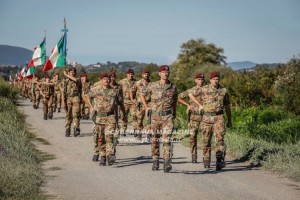
84° Anniversario di El Alamein ad Altopascio
Aviolancio delle Bandiere di Guerra dei Reparti della ‘’Folgore’’con due...
Aviolancio delle Bandiere di Guerra dei Reparti della ‘’Folgore’’con due...
Notizie dal Mondo
21-10-2026 - Introduction: The Dangerous Geopolitical Game in North Africa
The rapid recent developments in Libya have once...
21-10-2026 - Per vent’anni il petrolio dell’Uganda è stato soprattutto una promessa.
Oggi quella promessa prende forma...
21-10-2026 - Le radici di una comunità restano vive quando diventano occasioni d’incontro, conoscenza e crescita.
È...
20-10-2026 - Lo storico “In Memory of Nassiriya Project”, attivo dal 2007, abbatte le barriere geografiche e unisce istituzioni...
20-10-2026 - Un nuovo studio svedese accende i riflettori su una burocrazia che rischia di indebolire la competitività europea.
L'Europa...
19-10-2026 - Executive Summary
The ongoing maritime paralysis across the Bab el-Mandeb Strait and the Red Sea is no longer...


“Le memorie della serenissima a Noventa Vicentina” si è svolto domenica 11 ottobre...
Le Truppe Alpine festeggiano il 154° anniversario della fondazione.
Il 15 ottobre del...
Riparte a Terrasini, presso il Centro Diurno, il percorso formativo di Travel On Set, progetto...
Dall'1 al 4 ottobre l’Esercito Italiano ha partecipato alla 37ª edizione di Romics, presso...
Il 1° ottobre 2026 il Rotary Club Sanremo ha conferito la qualifica di socio onorario al...
Il nastro è stato tagliato dalla premier Giorgia Meloni, insieme al presidente della Regione...
Si è svolto il 29 settembre, presso la Casa dell’Aviatore di Roma, il convegno “Special...